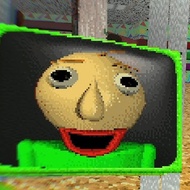
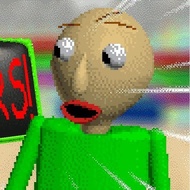


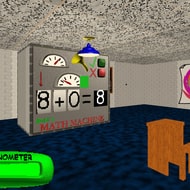
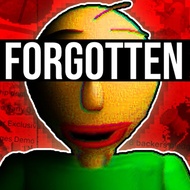
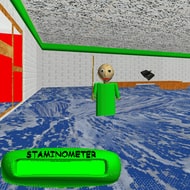
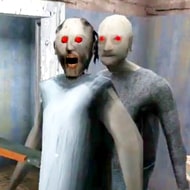


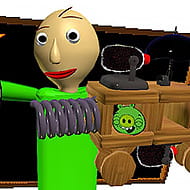

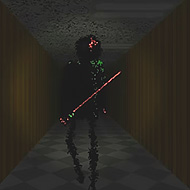
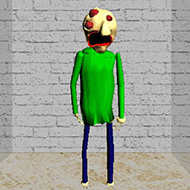
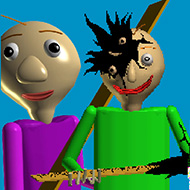
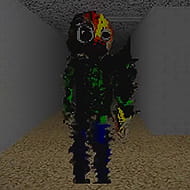
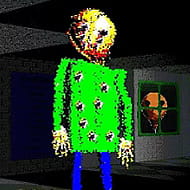
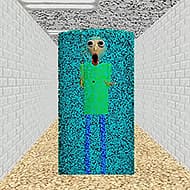
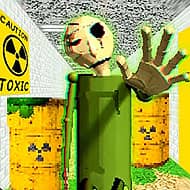
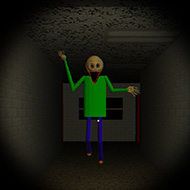
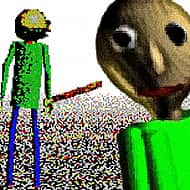
Baldi’s Basics The Mathematical Nightmare

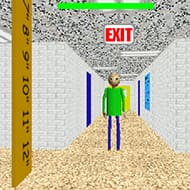
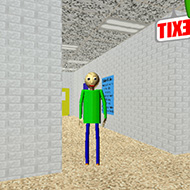
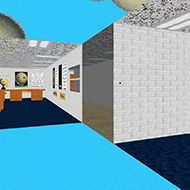
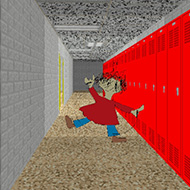
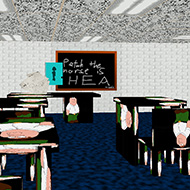
“Too less of knowledge, too less of Baldi” is the line used to introduce The Mathematical Nightmare, and it’s an odd way to describe a horror mod built around a math teacher’s temper. That phrasing sets the tone before the file even finishes extracting: this is a decompile project, meaning it’s constructed directly on top of the existing Baldi’s Basics codebase rather than built as a separate fangame from scratch, and the tagline hints that something about the familiar schoolhouse has been thrown off balance.
Starting Point Inside The Mathematical Nightmare
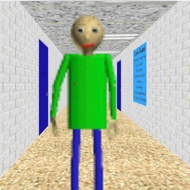
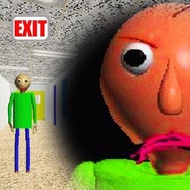
Anyone who has spent time with the base game already knows the shape of a run before it begins. You start in a hallway, you’re told to gather notebooks, and a teacher somewhere in the building is waiting to make that simple task much harder than it sounds. The Mathematical Nightmare keeps that shape intact. What it changes is tone rather than structure, at least based on what the mod’s own page reveals, and that’s part of why decompile-style projects like this one tend to divide opinion inside the modding community.
Early in the game, before you’ve crossed paths with a single interruption, the pacing still feels ordinary. That’s deliberate in almost every Baldi’s Basics mod of this type: the opening minutes exist to lull a returning player into a false sense of routine before anything unusual is introduced.
Series regulars will recognize this rhythm instantly, while newcomers coming in through a random mod list are more likely to be caught off guard by how quickly a familiar setup can curdle.
What Carries Over From The Original Schoolhouse
Because it’s a decompile rather than a from-scratch build, The Mathematical Nightmare inherits the mechanical backbone that almost every mod in this category shares. That means the Quarter-and-vending-machine loop is still the basic economy of the run, the BSODA is still the go-to option for buying a few seconds of breathing room, and the Energy Flavored Zesty Bar still exists as the item players grab when stamina is running low and the exit feels far away.
A decompile is the community’s term for a mod built by extracting and modifying the original game’s compiled files rather than writing new code from the ground up. It’s a faster route to a working mod, which is part of why so many one-person horror projects in this space are labeled that way, but it also means the ceiling on what changes is set by how deep the person modifying it is willing to dig.
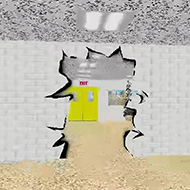
Once you cross the yellow swinging doors that normally unlock vending machine access, that inherited structure is still doing the heavy lifting, even if the atmosphere around it has been pushed somewhere darker.
Working Within A Decompile Instead Of A Fangame
This distinction matters more than it sounds like it should. A fangame is written independently and can look completely unlike the source material. A decompile mod is bound to the original engine’s limitations, so the surprises tend to come from reskins, new triggers, altered timing, or a changed reaction from an existing character rather than an entirely new system.
That’s also the most honest thing to say about a small, one-developer decompile like this: detailed public breakdowns of exactly what’s been altered are scarce, which is a common and fair criticism leveled at mods in this corner of the community, where documentation is often limited to a single paragraph and a screenshot.
What The Mathematical Nightmare Doesn’t Explain
Players drawn to horror-flavored school mods tend to fall into a few overlapping groups. Some are chasing a new scare and don’t care how it’s built. Others are specifically interested in decompile work because they’re learning to mod themselves and want to see how far a single person can stretch the existing assets. A third group is just working through every entry tagged under the same schoolhouse setting, treating each one as a short, disposable run rather than something to master.
None of those approaches require knowing every detail in advance, and that’s arguably the point of a mod this compact — it’s meant to be opened cold.
The Mathematical Nightmare isn’t trying to reinvent the classroom loop that made the original game recognizable in the first place; it’s leaning on that same structure, from the notebooks down to the Quarter in your pocket, and asking a returning player to notice what feels slightly wrong about it.