


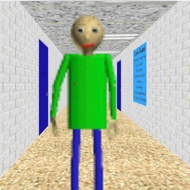




















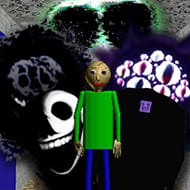






Baldi’s Basics: Teaching on Twos
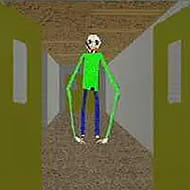


Why does counting feel more dangerous than running? In Baldi’s Basics: Teaching on Twos, the focus shifts toward rhythm and pattern recognition, turning simple math sequences into a core survival mechanic. Baldi’s Basics: Teaching on Twos builds tension through repetition, where every mistake changes how quickly the situation escalates.
Counting Mechanics in Baldi’s Basics: Teaching on Twos
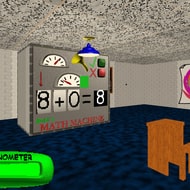
The central mechanic of the game revolves around counting in sequences of two. Notebook questions emphasize patterns rather than simple answers, requiring players to stay focused even under pressure. Beginners often fail by rushing instead of recognizing the pattern behind each problem.
In Baldi’s Basics: Teaching on Twos, incorrect answers affect more than just Baldi’s speed. They disrupt the rhythm players rely on, making it harder to predict movement timing. This creates a layered challenge where thinking and movement are connected.
The game rewards attention to patterns over quick reactions.
A subtle detail players notice is how the audio cues align with counting intervals. The ruler taps begin to match the rhythm of the sequence, which can either help or confuse depending on focus.
Movement and Rhythm Synchronization
Movement in this game becomes tied to counting patterns. Players who match their steps to a consistent rhythm often maintain better spacing from Baldi. Breaking that rhythm leads to uneven movement and increased risk.
Baldi’s Basics: Teaching on Twos encourages players to think about timing rather than distance alone. Turning corners, opening doors, and using items all feel different when done in sync with a rhythm.
The game transforms movement into a structured flow.
Players often realize too late that rushing breaks their rhythm, causing missteps that lead directly into danger zones.
Escalation Through Pattern Disruption
As more notebooks are collected, Baldi’s Basics: Teaching on Twos increases pressure by disrupting established patterns. Questions become harder to follow, and the rhythm players depend on becomes less reliable. This forces constant adaptation.
In this game, difficulty comes from losing consistency rather than gaining speed. Players who cannot adjust to shifting patterns struggle to maintain control of movement and decision-making.
This is where most runs fall apart.
One recognizable moment occurs when a player answers correctly but still feels out of sync, leading to poor positioning despite doing everything right.
Which players connect with Baldi’s Basics: Teaching on Twos?
Pattern thinkers are drawn to the structured challenges. They enjoy recognizing sequences and applying them under pressure. During a run, this feels like solving a rhythm puzzle while moving.
Rhythm-focused players appreciate how movement aligns with timing. Matching steps to patterns creates a unique flow. The experience feels controlled until the pattern shifts.
Analytical players enjoy the layered difficulty. The connection between math and movement creates deeper challenges. Each run feels like balancing logic and execution.
Players seeking something different like the change in focus. The emphasis on counting sets it apart from other versions. The experience feels fresh and demanding.
Handling Common Challenges
Players often ask how to keep rhythm in Baldi’s Basics: Teaching on Twos, and the key is consistent pacing. Moving at a steady speed and avoiding sudden changes helps maintain alignment with audio cues. Breaking rhythm usually leads to mistakes.
Another common question is how notebook patterns work, and they follow sequences based on counting by two. Recognizing this quickly reduces errors and prevents unnecessary speed increases for Baldi.
Many also wonder if rhythm affects survival, and it does directly. Staying in sync improves movement efficiency and reduces the chance of getting caught in tight spaces.
Baldi’s Basics: Teaching on Twos concludes with a final sequence where rhythm and decision-making align or collapse. When the exit opens and the pattern finally breaks, the strongest memory is how every step matched the count just long enough to escape Baldi’s Basics: Teaching on Twos.