




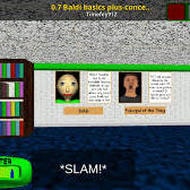
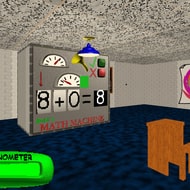


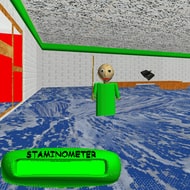








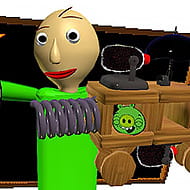
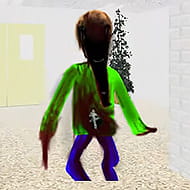
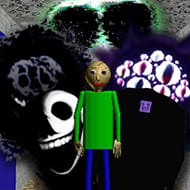


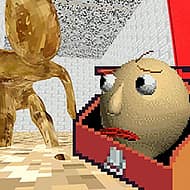
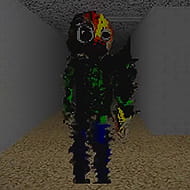
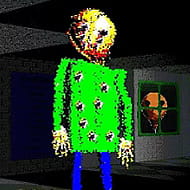
Baldi’s Basics It’s All Gone
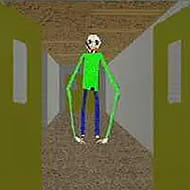
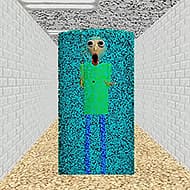

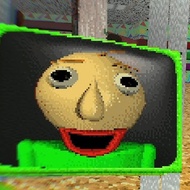
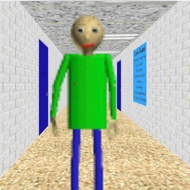
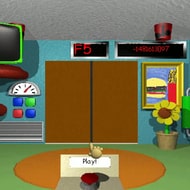
What happens when the school feels empty, but not in a safe way? In Baldi’s Basics It’s All Gone, the usual chaos is stripped back, leaving long silent corridors where every sound carries further than expected. The classrooms still exist, the notebooks still wait, and Baldi still listens, but the absence of distractions makes each mistake feel louder. Baldi’s Basics It’s All Gone changes the rhythm of the game by removing noise clutter, forcing players to rely on awareness instead of reaction.
Silence and Early Decisions in Baldi’s Basics It’s All Gone
The first thing players notice in the game is how quiet everything feels. Without constant interruptions from characters like Playtime or Gotta Sweep in the early phase, movement becomes more deliberate, and every door you open stands out. Beginners often misread this calm as safety and rush through the first notebooks without planning exits.
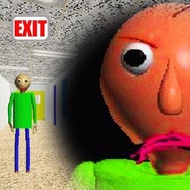
This version of the game punishes careless routing more than fast mistakes. Because fewer events distract Baldi, his pathing becomes more direct, and he reaches the player faster after the second or third incorrect answer. The lack of chaos actually increases pressure because there is nothing to break line of pursuit.
The game teaches you quickly that silence does not mean safety.
Another common mistake involves ignoring hallway spacing. Players move in straight lines instead of using corners and side rooms, which makes them easier to track in this quieter environment.
Item Value and Limited Recovery Windows in Baldi’s Basics It’s All Gone
Items such as BSODA and the Energy Flavored Zesty Bar feel more valuable in this game because there are fewer interruptions to create natural escape moments. A wasted item is rarely recovered through luck, since fewer random events occur to help the player reposition.
Using BSODA in a straight hallway often gives less value than expected. In Baldi’s Basics It’s All Gone, pushing Baldi around a corner forces a longer path recalculation, which becomes critical due to the cleaner map flow. Players who save items for corners consistently survive longer runs.
The game rewards careful inventory planning over reactive use.
Another subtle mechanic involves the Yellow Door Lock. With fewer characters interacting with doors, locking one at a key junction can completely reshape Baldi’s route, buying significantly more time than in other versions.
Mid-Game Pressure Without Distractions
After collecting several notebooks, Baldi’s Basics It’s All Gone begins to feel more intense despite the lack of additional characters. The ruler sound becomes the dominant cue, and without overlapping noises, players must rely entirely on timing and spatial awareness.
In this game, failure often comes from overexposure. Staying too long in open hallways without breaking line of sight allows Baldi to close distance steadily. There are no external disruptions to reset spacing, so once the gap shrinks, recovery becomes difficult.
This is where players realize the absence of chaos is the real challenge.
A detail only regular players notice is how the echo of footsteps changes depending on hallway width. Wider areas slightly distort distance perception, which can lead to incorrect decisions when choosing escape routes.
Route Discipline in Baldi’s Basics It’s All Gone
Successful runs in this game rely on strict route discipline. Instead of improvising, players plan notebook order based on proximity to exits and item locations. Deviating from that plan often results in entering dead zones with no recovery options.
One advanced technique involves looping through the same set of corridors while gradually collecting notebooks. This maintains familiarity with the environment and reduces the chance of running into unexpected dead ends.
The game rewards consistency over creativity.
Players also learn to avoid unnecessary door interactions. Each opened door creates a sound cue, and in this version, those cues are more noticeable and easier for Baldi to track.
Which players adapt best to Baldi’s Basics It’s All Gone?
Minimalist thinkers are drawn to the stripped-down design that removes distractions. They enjoy focusing on core mechanics like movement and sound without interference. During a run, this feels like navigating a clean but unforgiving system.
Stealth-focused players appreciate the importance of quiet movement and positioning. The absence of noise clutter makes every action meaningful. This creates a tense experience where small decisions carry weight.
Planners enjoy mapping routes and sticking to them. The predictable environment rewards those who think ahead rather than react. Each run feels like executing a carefully designed strategy.
Players who dislike randomness prefer the consistent behavior patterns. Fewer unpredictable events make outcomes feel more controlled. The experience becomes about precision rather than luck.
Answering Common Situations
Players often ask how to survive long hallway chases in Baldi’s Basics It’s All Gone, and the answer lies in breaking line of sight quickly. Turning into classrooms and closing doors forces Baldi to recalculate his path, which creates small but crucial gaps. Staying in open space almost always leads to failure.
Another common question is what BSODA does in this version of the game, and it functions best when used near corners rather than in straight lines. The push effect combined with path recalculation gives more distance than expected when used strategically.
Many also wonder if the lack of characters makes the game easier, but it actually increases difficulty. Without interruptions, Baldi maintains consistent pressure, making every mistake harder to recover from.
Baldi’s Basics It’s All Gone ends with a feeling of controlled tension, where each notebook collected brings you closer to a narrow escape. The moment you open the final exit and hear nothing behind you feels different, because in Baldi’s Basics It’s All Gone, silence was the threat the entire time.