









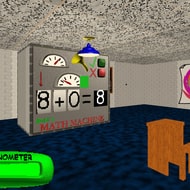




















Baldi’s 67 Basics



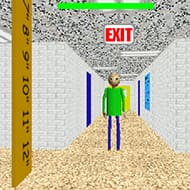
Baldi’s 67 Basics presents a rule-driven challenge where attention and quick reactions matter more than speed. The player is placed in a closed environment filled with tasks, unusual logic, and strict consequences for mistakes. Every action affects progression, making exploration risky but necessary. This title rewards observation, memory, and learning how systems interact rather than relying on reflexes alone.
Core Mechanics and Player Objectives
In Baldi’s 67 Basics, the main objective revolves around completing structured tasks while avoiding penalties triggered by incorrect choices. The space is divided into sections that unlock gradually, encouraging careful navigation. The game constantly reacts to player behavior, adjusting pressure through sound cues, movement patterns, and rule enforcement.
- Collect required items in the correct order
- Memorize rule variations that change between levels
- Use limited tools to control movement and timing
- Avoid triggering pursuit states caused by errors
Levels, Rules, and Progression Flow
Each level in Baldi’s 67 Basics introduces modified conditions that test adaptability. Rules may appear simple at first, but they evolve through subtle changes that punish routine behavior. The game does not explain every consequence directly, which turns experimentation into a key strategy.
- Early stages focus on learning space layout
- Mid levels add conflicting objectives
- Advanced sections combine time pressure with limited resources
Shortcuts, Exploits, and Player Discoveries
Many players explore Baldi’s 67 Basics for its flexible systems that allow unconventional solutions. Certain movement patterns, item combinations, and timing tricks can reduce risk. These discoveries are often called hacks, although they rely on understanding mechanics rather than external tools.
- Using sound triggers to redirect threats
- Delaying objectives to control pacing
- Saving key items for stacked effects
Common Questions From Players
Players often ask whether Baldi’s 67 Basics supports multiple play styles. The answer is yes, as the game allows both cautious and aggressive approaches. Others wonder if repetition is required; while practice helps, learning patterns matters more than memorizing paths.
Baldi’s 67 Basics remains engaging because it challenges decision-making instead of mechanical skill. Each session feels different due to adaptive pressure and evolving rules, giving players reasons to return and refine their approach.